
Protecting Your Coastal Home from Salt Air Buildup
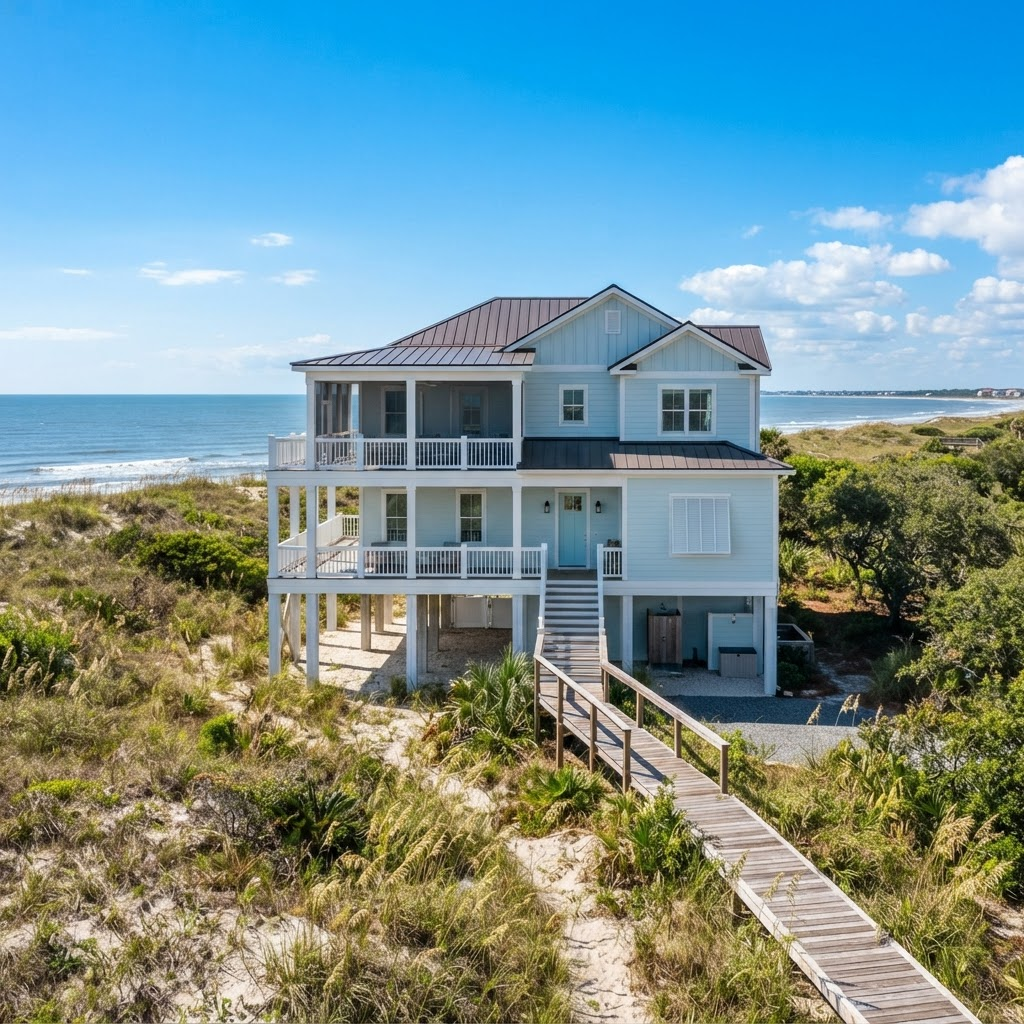
The barrier islands and waterfront neighborhoods around Charleston are beautiful places to live, but the same salt air that comes with an ocean breeze settles on every exterior surface of your home. Here's how to manage it.
How salt air affects your home
Salt is carried inland on coastal breezes and settles as a fine film on siding, windows, railings, and fixtures. Over time it dulls finishes, encourages corrosion on metal, and gives algae an easier foothold.
- Hazy, spotted windows that never look fully clean
- Dull, filmy siding even between rains
- Corrosion on railings, hardware, and fixtures
Why rain doesn't rinse it away
It's a common assumption that rain washes salt off, but rain often just redistributes it, and salt keeps accumulating between storms. On protected surfaces under eaves and porches, it barely gets touched at all.
Regular cleaning is the best defense
For coastal homes, consistent exterior cleaning matters more than a once-in-a-while deep clean. Regularly rinsing salt film from siding and glass, and soft washing to keep algae in check, protects both the appearance and the surfaces themselves.
For beach homes and rentals especially, a maintenance schedule keeps the property looking sharp and helps finishes last longer.
Don't forget the details
Decks, outdoor showers, railings, and stairs take a beating from salt and sun. Including them in your cleaning routine keeps the whole property consistent and comfortable to use.